 Reviews


 Proudly American


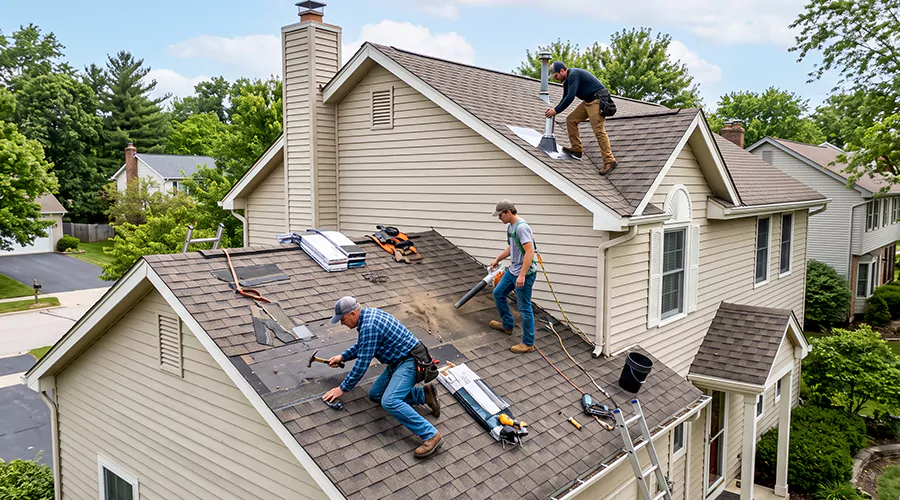
Roof restoration repairs and renews an existing roof so it can remain in service without complete replacement. A residential project may cost roughly $2,500 to $7,000 in 2026 when the roof needs cleaning and repairs before a protective treatment. Water damage restoration may be needed when leaks or water intrusion have affected the roof or surrounding areas. Restoration works best when the underlying roof remains structurally sound.
The process is more involved than painting or coating a roof. Existing defects should be corrected before a new protective surface is applied.
What Does Roof Restoration Include?
Roof restoration combines repairs with surface renewal. The exact work depends on the roofing material and its condition.
A typical project can include:
- Inspecting the roof.
- Cleaning accumulated dirt or growth.
- Replacing isolated damaged materials.
- Repairing minor leaks.
- Correcting flashing defects.
- Treating suitable surface corrosion.
- Sealing vulnerable joints where appropriate.
- Applying a compatible protective system.
Restoration should address existing defects before cosmetic treatment begins.
How is Restoration Different From Roof Repair?
A roof repair normally addresses a specific problem such as damaged flashing or a localized leak. Restoration covers a wider area and aims to renew much of the existing roof system.
| Work Type | Main Purpose |
|---|---|
| Local repair | Correct one damaged area |
| Restoration | Repair and renew an aging roof |
| Coating | Add a protective surface |
| Replacement | Install a new roofing system |
A few isolated repairs do not automatically mean the whole roof needs restoration.
When Does a Roof Need Restoration?
Restoration becomes useful when aging affects broad areas but the roof is still structurally suitable to retain. The strongest candidates have surface deterioration rather than widespread failure.
Warning signs include:
- Roof surfaces appear badly faded.
- Several minor leaks have developed.
- Flashing needs repeated attention.
- Isolated tiles are broken.
- Metal shows localized corrosion.
- Protective coatings are wearing away.
- Minor surface cracks are developing.
- Roof maintenance is becoming more frequent.
- Interior stains appear after heavy rain.
- The roof looks aged but remains generally stable.
Roof restoration is less suitable when large structural sections have already failed.
Which Roofs Can Be Restored?
Several roofing systems can be restored when their supporting structure remains in usable condition. The repair method changes with the material.
Tile roof restoration may include replacing damaged tiles and repairing ridge materials before the roof is cleaned or treated.
Metal roof restoration can involve correcting localized corrosion before seams or fasteners are treated. A compatible roof coating may follow when the panels still have enough structural strength.
The existing roof system should guide the restoration method.
When Is Roof Replacement Better?
Replacement is usually more appropriate when damage reaches the roof deck or large areas have lost structural function. A surface treatment cannot rebuild rotted wood or severely weakened roofing material.
| Roof Condition | Restoration | Replacement |
|---|---|---|
| Faded surface | Good candidate | Usually unnecessary |
| Isolated leaks | Often possible | Not usually |
| Limited damaged tiles | Often possible | Not usually |
| Localized metal corrosion | Often possible | Sometimes |
| Widespread deck damage | Poor candidate | Usually |
| Major structural sagging | Poor candidate | Usually |
| Extensive material failure | Poor candidate | Often |
Age should be considered with condition rather than used as the only decision.
How Much Does Roof Restoration Cost?
Roof restoration cost commonly falls around $2,500 to $7,000 for many residential projects in 2026. Coating-focused work can cost less while extensive repairs can move the total higher.
Major cost factors include:
- Roof size
- Roofing material
- Access difficulty
- Number of repairs
- Surface preparation
- Coating choice
- Flashing condition
A roof that needs structural decking repair can move beyond a normal restoration scope.
How Long Does Roof Restoration Take?
A straightforward residential project may take about two to five working days. More involved repairs can extend the schedule.
Weather has a large effect because some coatings or repair materials need dry conditions for application and curing.
The general process may include one day for inspection and preparation followed by repair work. Cleaning and coating can then add several more days.
Can a Leaking Roof Be Restored?
Sometimes. Limited leaks caused by repairable defects can often be addressed before the rest of the roof is restored.
Recurring leaks deserve more investigation.
Water stains can originate from:
- Failed flashing
- Damaged penetrations
- Broken roofing materials
- Loose seams
- Localized coating failure
- Damaged underlayment
A coating should not be applied simply to hide an unidentified leak.
What Can You Check Yourself?
You can perform a useful roof inspection without climbing onto the roof. Use binoculars from the ground and inspect accessible attic areas when conditions are safe.
Look for:
- Missing roof materials.
- Broken tiles.
- Visible corrosion.
- Damaged flashing.
- Interior water stains.
- Damp attic insulation.
- Uneven roof sections.
- Previous repair patches.
Photograph questionable areas and compare them after severe weather.
Do not walk on a damaged or steep roof simply to assess surface condition.
When Should You Call a Professional?
Professional assessment is appropriate when you cannot tell whether deterioration is limited to the roof covering or extends into the structure.
Seek professional help when:
- Several areas leak.
- Roof sections appear to sag.
- Decking may be wet.
- Large areas of metal are corroded.
- Many tiles are damaged.
- Flashing failures keep returning.
- The roof is unsafe to access.
A detailed inspection can separate a restoration candidate from a roof that has progressed too far.
How Can You Delay the Need for Restoration?
Regular inspection can catch minor defects before they spread.
Use this maintenance routine:
- Check the roof after major storms.
- Keep gutters clear.
- Correct isolated flashing problems promptly.
- Replace individual damaged tiles.
- Watch metal surfaces for early corrosion.
- Check attic areas for moisture.
- Keep roof drainage paths open.
Conclusion
Roof restoration renews an aging roof while keeping most of the existing system in place. It is best suited to roofs with repairable surface problems and a sound supporting structure. Repeated leaks or widespread decking damage can make replacement more practical. Inspect the roof from a safe location and check the attic for moisture. If structural condition is uncertain, professional assessment can clarify whether restoration still makes financial sense.
Frequently Asked Questions
Is roof restoration the same as replacement?
No. Restoration keeps most of the existing roof while replacement installs a new roofing system.
Can an old roof still be restored?
Yes. Age alone does not prevent restoration when the roof remains structurally sound.
Does restoration stop roof leaks?
It can correct repairable leaks when their sources are identified before the restoration work.
How long does restoration take?
Many residential projects take about two to five working days depending on repairs and weather.
Is coating alone considered full restoration?
Not always. A complete restoration may include cleaning and repairs before a protective coating is applied.
Is restoration cheaper than replacement?
It often is when the existing roof remains suitable to keep and major structural work is not required.